Part-66 and Part-147: Europe's framework for maintenance technician training
Maintenance licences and approved training organisations fall under Regulation (EU) No 1321/2014. Key points for schools, workshops and candidates.
By Newsroom · Published
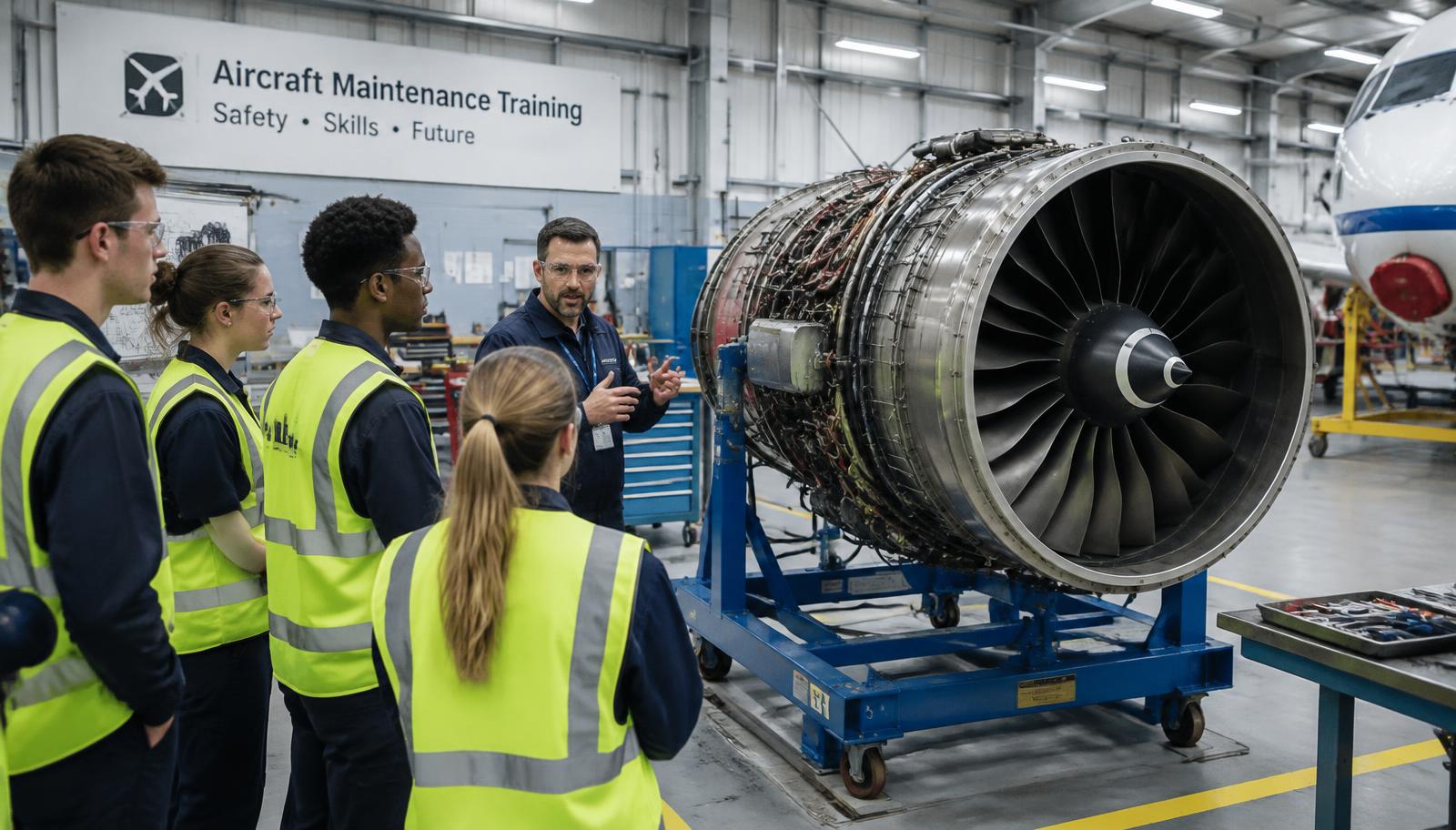
One regulation, several annexes
Regulation (EU) No 1321/2014 on continuing airworthiness sets out, in its annexes, the applicable requirements:
- Annex III (Part-66): the aircraft maintenance licence (AML) for certifying staff;
- Annex IV (Part-147): approved maintenance training organisations.
Part-66 licence categories
Part-66 defines in particular categories A, B1, B2, B2L, B3, L and C, each tied to a certification scope.
The role of a Part-147 organisation
An approved Part-147 organisation delivers basic and/or type training and conducts the related examinations. In France, approval is granted by the competent authority (DGAC / OSAC).
Further reading
EASA publishes a consolidated version (Easy Access Rules) of the regulation including AMC and GM.
Sources
Related articles
EU–US agreement: how mutual recognition of maintenance organisations works
In force since 1 May 2011, the EU–US civil aviation safety agreement allows shops on both sides of the Atlantic to obtain the other authority's approval without a full audit. Here is how it works.
Part-CAMO: what the 2019 reform changed for continuing airworthiness management
With Regulation (EU) 2019/1383, continuing airworthiness management moved out of Part-M into a dedicated annex, Part-CAMO, with a management system that includes safety risk management.
Part-21: design (DOA) and production (POA) approvals, the architecture of initial airworthiness
Before it can be maintained, an aircraft must be designed and built according to precise rules. European Part-21 organises both stages around two key approvals, DOA and POA, whose interplay also shapes the work of maintenance shops.