Galileo: architecture, services and governance of Europe's satellite navigation system
In service since 15 December 2016, Galileo relies on three orbital planes at an altitude of 23,222 km. Europe's navigation system offers five services, including a Public Regulated Service reserved for governmental use.
By Newsroom · Published
A system under civilian control
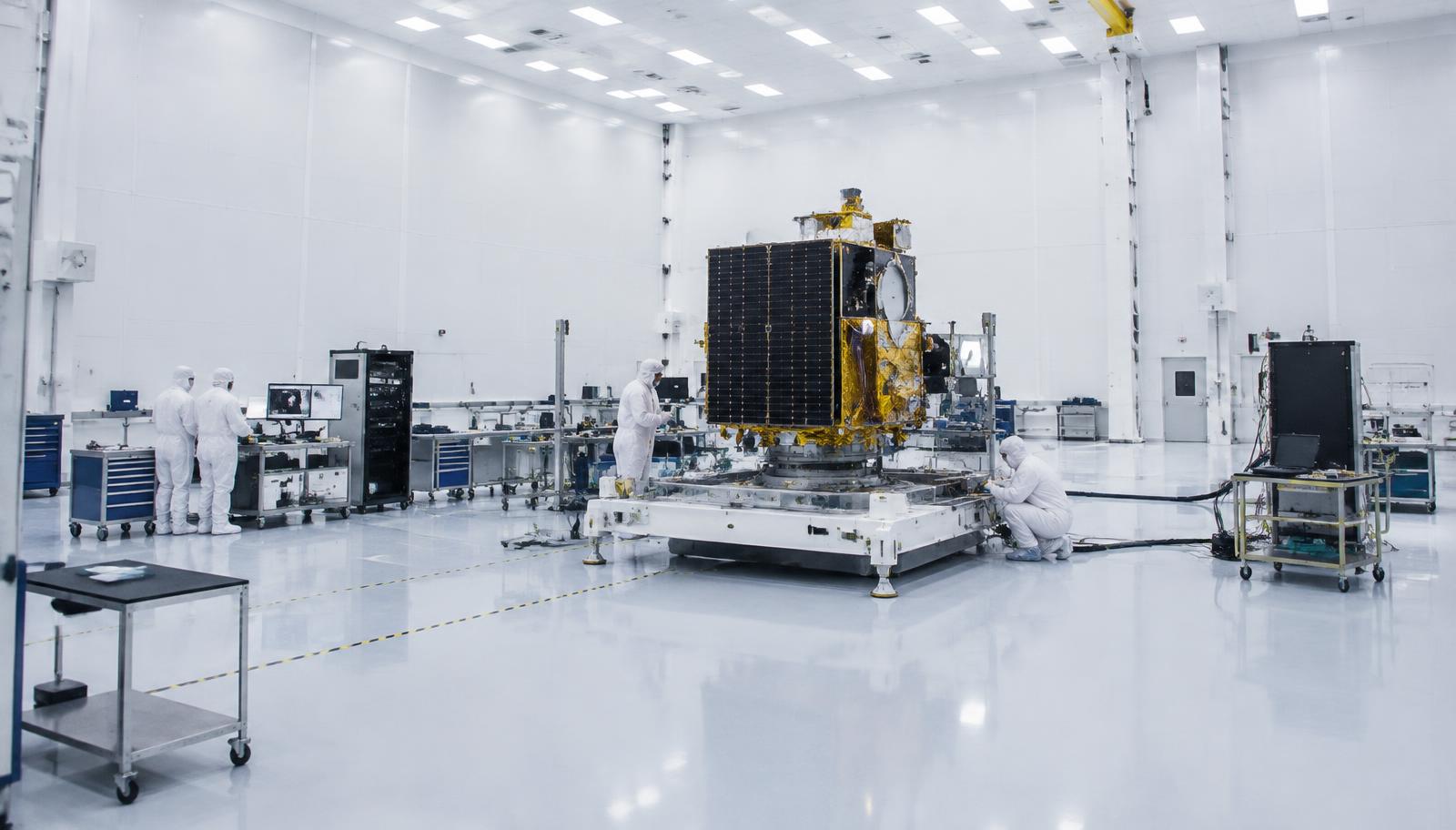
Galileo is Europe's global navigation satellite system, designed from the outset to be under civilian control, unlike the American GPS or Russian GLONASS, which have military origins. The European Union decided in 1998 to build its own positioning system; the first validation satellites were launched in 2011 and the first positioning tests were carried out in 2013.
The system entered service with Initial Services on 15 December 2016, with 18 satellites in orbit. Since 2017, operations have been carried out by the EU agency now known as EUSPA, while ESA acts as technical prime for design and deployment.
A medium Earth orbit constellation
The architecture relies on satellites placed in medium Earth orbit (MEO):
- three circular orbital planes;
- an altitude of 23,222 km;
- an inclination of 56° to the equator;
- eight nominal satellites per plane, complemented by active spares.
According to CNES, the constellation has successively included two GIOVE test satellites (2005 and 2008), four In-Orbit Validation (IOV) satellites (2011-2012), and then 28 Full Operational Capability (FOC) satellites placed in orbit between August 2014 and September 2024. Two of them, injected into an incorrect orbit by a Soyuz launcher in 2014, are used for other purposes. Since September 2024 the number of available satellites has allowed fully operational services. The target is 30 nominal satellites plus spares.
Five distinct services
Galileo offers several levels of service:
- the Open Service, available to all and built into smartphones and car navigation systems;
- the High Accuracy Service, with accuracy of around 20 cm according to CNES;
- the authentication service, which makes it possible to verify that received signals are genuine;
- the Public Regulated Service (PRS), encrypted and reserved for authorised government users and critical public services;
- the Search and Rescue (SAR) service, Europe's contribution to the international Cospas-Sarsat system, which relays distress signals and can send an acknowledgement back to the sender.
Dual-frequency capability, standard on Galileo, enables real-time accuracy of around one metre. According to CNES, the system had around 4 billion users in 2024.
A programme with strong French content
CNES made a major scientific and technical contribution, particularly in defining the navigation signals and data-processing methods. France also contributes to funding through its share of the EU budget, which stood at 18.5% in 2024 according to CNES. Launches have been carried out successively by Soyuz, Ariane 5 and now Ariane 6.
An infrastructure that has become critical
Beyond the general public, Galileo supports the synchronisation of telecommunications and energy networks, time-stamping of financial transactions, precision agriculture and transport. The PRS also makes it a sovereignty tool for public administrations and the armed forces. This growing dependency calls for particular attention to signal robustness against jamming and spoofing, a central issue for the second generation of the system now in preparation.
Three-tier governance
Galileo illustrates the division of roles typical of the Union's space programmes: the European Commission manages the programme on behalf of the Union, which owns the system; ESA provides technical expertise for design, procurement and deployment; and EUSPA is responsible for service operations and market development. This model has served as a reference for subsequent programmes. It also shows how European institutions can combine an intergovernmental technical agency with Union ownership and funding over several decades.
Key takeaways
Galileo is now a fully operational infrastructure owned by the Union, whose value lies as much in its accuracy as in its secure services. Replenishing the constellation and moving to the second generation are the next industrial milestones.
Sources
Related articles
Ariane 6: key takeaways from the 9 July 2024 maiden flight
Europe's new heavy launcher made its inaugural flight from the Guiana Space Centre. Architecture, versions and programme stakeholders.
CNES and ESA: who does what in European space governance
A national agency founded in 1961, CNES represents France at ESA, an intergovernmental organisation of 23 Member States. It is a multi-layered architecture, completed by the European Union's own programmes.
IRIS²: the architecture and industrial set-up of the EU's sovereign constellation
Established by Regulation (EU) 2023/588, the IRIS² constellation is due to provide secure connectivity to European governments by 2030. Its deployment has been entrusted to the SpaceRISE consortium under a 12-year concession.